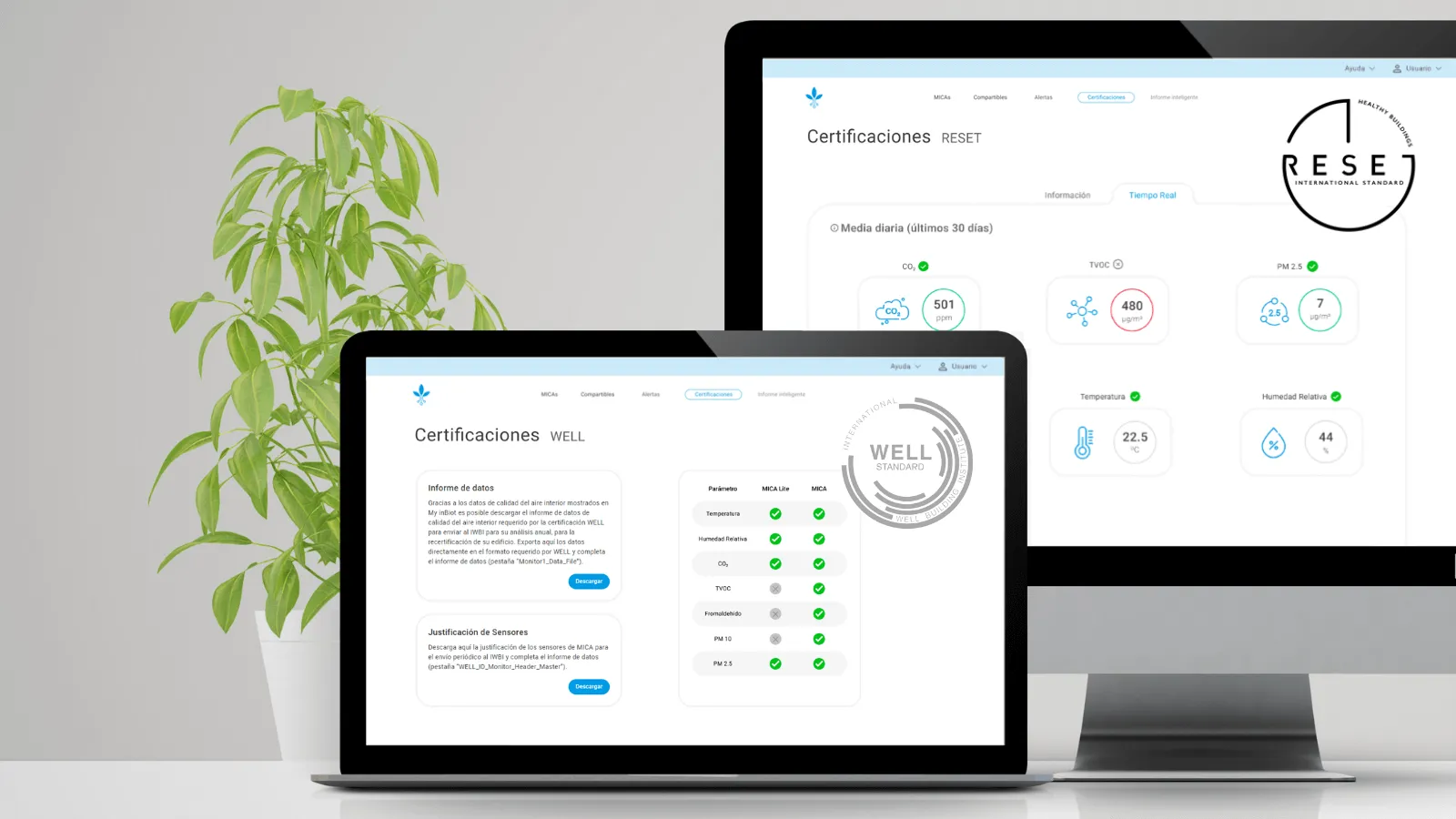




Earn 10+ points for WELL Certification with continuous monitoring.
Show me how  ➜

WikinBiot

Case studies, news, information and tips to understand and improve indoor air quality.

Thank you! Your submission has been received!
Oops! Something went wrong while submitting the form.

Villa Ayantam: continuous IAQ monitoring in Spain’s highest-scoring BREEAM residential project

Villa Ayantam, Spain’s first residential project to reach BREEAM Outstanding, integrated inBiot’s continuous IAQ monitoring via Modbus into Schneider Electric’s BMS. A technical case on how data quality at source supports certification, operation and ESG reporting from a single flow.

Ver post

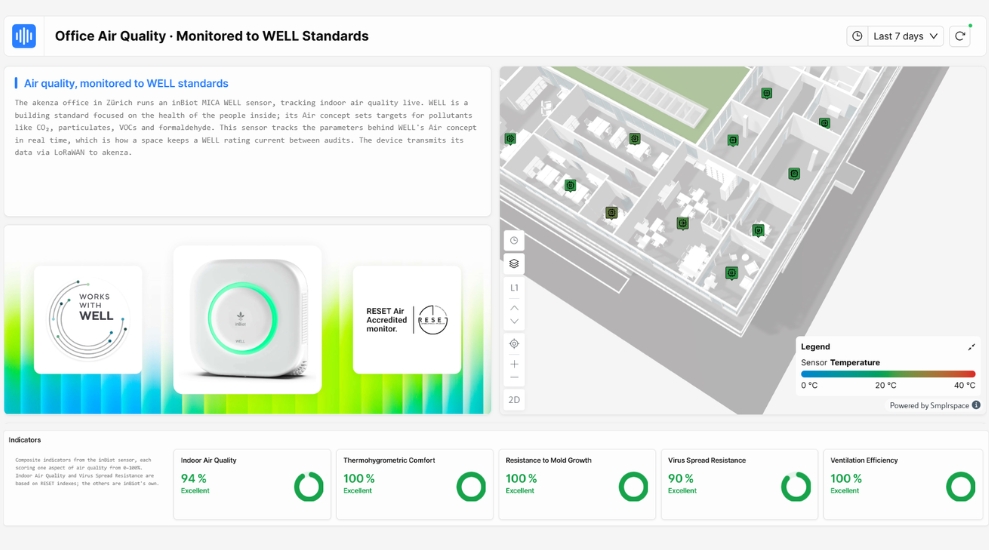
From data to action: how the integration between inBiot and Akenza drives smart buildings

The integration between inBiot and Akenza transforms indoor air quality data into automated actions within smart buildings, centralizing IAQ information with other building systems to improve comfort, efficiency and compliance with certifications such as WELL and RESET.

Ver post

Wildfire smoke reached a care home in the Rockies: what six days of indoor air quality data showed

An inBiot MICA recorded indoor air quality every 15 minutes inside a Canmore care home during a June 2026 wildfire smoke event. The data is benchmarked against WHO, WELL v2 and GO IAQS thresholds, showing the building filtered out two thirds of outdoor PM2.5.

Ver post

Forecasting CO₂ before it rises: why there is no single model for every indoor space

Forecasting indoor CO₂ makes it possible to act before a peak occurs, not after it. Two peer-reviewed studies compare eleven forecasting models across six space types, from school classrooms to hospitals, showing that the right approach depends on how a space is occupied. The most novel finding: foundation models can deliver a competent forecast from day one, even with no local historical data.

Ver post

Classroom overheating: why temperature and CO₂ must be managed together

Between 70% and 90% of European school days above 30 °C fall before the summer holidays. Opening a window lowers CO₂ and warms the room; closing it does the opposite. What the evidence says about the 26.7 °C threshold, what the EPBD now requires, and why the conflict is only solved by measuring both parameters classroom by classroom.

Ver post

Villa Ayantam: continuous IAQ monitoring in Spain’s highest-scoring BREEAM residential project

Villa Ayantam, Spain’s first residential project to reach BREEAM Outstanding, integrated inBiot’s continuous IAQ monitoring via Modbus into Schneider Electric’s BMS. A technical case on how data quality at source supports certification, operation and ESG reporting from a single flow.

Ver post

From data to action: how the integration between inBiot and Akenza drives smart buildings

The integration between inBiot and Akenza transforms indoor air quality data into automated actions within smart buildings, centralizing IAQ information with other building systems to improve comfort, efficiency and compliance with certifications such as WELL and RESET.

Ver post

Wildfire smoke reached a care home in the Rockies: what six days of indoor air quality data showed

An inBiot MICA recorded indoor air quality every 15 minutes inside a Canmore care home during a June 2026 wildfire smoke event. The data is benchmarked against WHO, WELL v2 and GO IAQS thresholds, showing the building filtered out two thirds of outdoor PM2.5.

Ver post

Forecasting CO₂ before it rises: why there is no single model for every indoor space

Forecasting indoor CO₂ makes it possible to act before a peak occurs, not after it. Two peer-reviewed studies compare eleven forecasting models across six space types, from school classrooms to hospitals, showing that the right approach depends on how a space is occupied. The most novel finding: foundation models can deliver a competent forecast from day one, even with no local historical data.

Ver post

Classroom overheating: why temperature and CO₂ must be managed together

Between 70% and 90% of European school days above 30 °C fall before the summer holidays. Opening a window lowers CO₂ and warms the room; closing it does the opposite. What the evidence says about the 26.7 °C threshold, what the EPBD now requires, and why the conflict is only solved by measuring both parameters classroom by classroom.

Ver post

inBiot, Aster Award for Best Entrepreneurial Project from ESIC Navarra: Navarran technology to care for the air we breathe

inBiot has won the Aster Award for Best Entrepreneurial Project from ESIC Navarra, a recognition close to home for its indoor air quality monitoring technology, designed and manufactured in Navarra and deployed in more than 30 countries.

Ver postAmpliar información

inBiot and EcoMT announce a technology partnership to integrate indoor air quality into advanced building management platforms

inBiot and EcoMT consolidate two years of international collaboration with the native integration of IAQ data into the OTEA platform, enabling dashboards, alerts and energy optimisation within the EMOS framework.

Ver postAmpliar información

When IAQ becomes infrastructure: BMS, compliance and operational performance

IAQ data is now a control and compliance layer in smart buildings. Explore EPBD 2024 implications, BMS integration challenges and continuous monitoring strategy.

Ver postAmpliar información

Schools and universities: 5 reasons to invest in continuous indoor air quality monitoring

Indoor air quality in educational buildings affects health, learning performance and comfort. Five reasons to invest in IAQ monitoring in schools and universities.

Ver postAmpliar información

3 ways to save energy through indoor air quality monitoring in HVAC systems

In addition to its impact on people's health and well-being, monitoring indoor air quality is key to energy efficiency in businesses.

Ver postAmpliar información

Webinar | Indoor Air Quality in WELL Certifications

In collaboration with ITG WELL, in this webinar we explore WELL certification and its relevance in creating healthy spaces, with a special focus on indoor air quality (IAQ).

Ver postAmpliar información
Webinar | RESET Air Standard: Technology and Innovation in Air Quality Monitoring

In this webinar we delve deeper into the RESET Air standard and share the latest innovations in indoor air quality monitoring. Featuring Stanton Wong, President of RESET.

Ver postAmpliar información

Webinar | Transforming Smart Maintenance with IoT and Air Quality Monitoring

Discover how integrating IoT technologies and advanced air quality monitoring can revolutionize facility management.

Ver postAmpliar información
Webinar | From data to impact: Defining a common language for Indoor Air Quality

How can we move from fragmented data to a shared language that drives real progress?

Ver postAmpliar información
UNE 171380:2024: Continuous indoor CO2 measurement for health prevention and wellness improvement

Find out all about the recent UNE standard for continuous indoor CO2 measurement and how we can help you implement it.

Ver postAmpliar información

An easier path to your WELL and RESET certifications with My inBiot

Our My inBiot platform helps you manage your indoor air quality data for WELL and RESET certifications.

Ver postAmpliar información

Temperature

It is the most common parameter to determine thermal comfort inside a room.

View postAmpliar información

Relative humidity

Values ​​outside the optimal range weaken the respiratory mucous membranes, increasing the risk of contracting respiratory diseases.

View postAmpliar información

Volatile Organic Compounds - TVOC

Total volatile organic compounds, present in everyday materials and which can cause skin or respiratory tract irritation.

View postAmpliar información

Particulate matter

Suspended particles that can lead to asthma, allergic conditions or heart failure, depending on their size and nature.

View postAmpliar información

Formaldehyde

A highly volatile and common toxic gas in indoor spaces, classified as a carcinogen 1B by the EU since 2016.

View postAmpliar información

Ozone

Reactive and highly oxidative gas with low solubility in water. In high concentrations it can damage the respiratory system and affect other systems such as the cardiovascular, immune, gastrointestinal and liver systems.

View postAmpliar información

Nitrogen Dioxide

Toxic, highly reactive and corrosive gas, considered one of the six most critical listed pollutants in terms of affecting indoor air quality.

View postAmpliar información

Carbon Monoxide

Colorless, odorless and tasteless gas that poses a risk of serious health effects if exposed to prolonged inhalation.

View postAmpliar información

Noise

One of the main parameters for determining acoustic comfort inside a space.

View postAmpliar información

Indoor Air Quality Indicator

Based on the RESET AIR INDEX, the IAQ indicator simply displays the indoor air quality status of a space in real time.

View postAmpliar información

Thermohygrometric Comfort Indicator

It allows you to easily and objectively identify the optimal temperature and humidity ranges, helping you save energy and maintain an ideal environment of comfort.

View postAmpliar información

Resistance to Mold Growth Indicator

Helps identify vulnerable areas and decision-making to prevent health problems and material deterioration.

View postAmpliar información

Virus Spread Resistance Indicator

Based on the RESET VIRAL INDEX, it shows the resistance that the air in a space offers to the spread of viruses, helping you minimize the potential for airborne viral infection.

View postAmpliar información

Ventilation Efficiency Indicator

It indicates in real time the effectiveness of ventilation in an interior space, allowing the building's systems to be optimized and ensuring a healthy environment.

View postAmpliar información

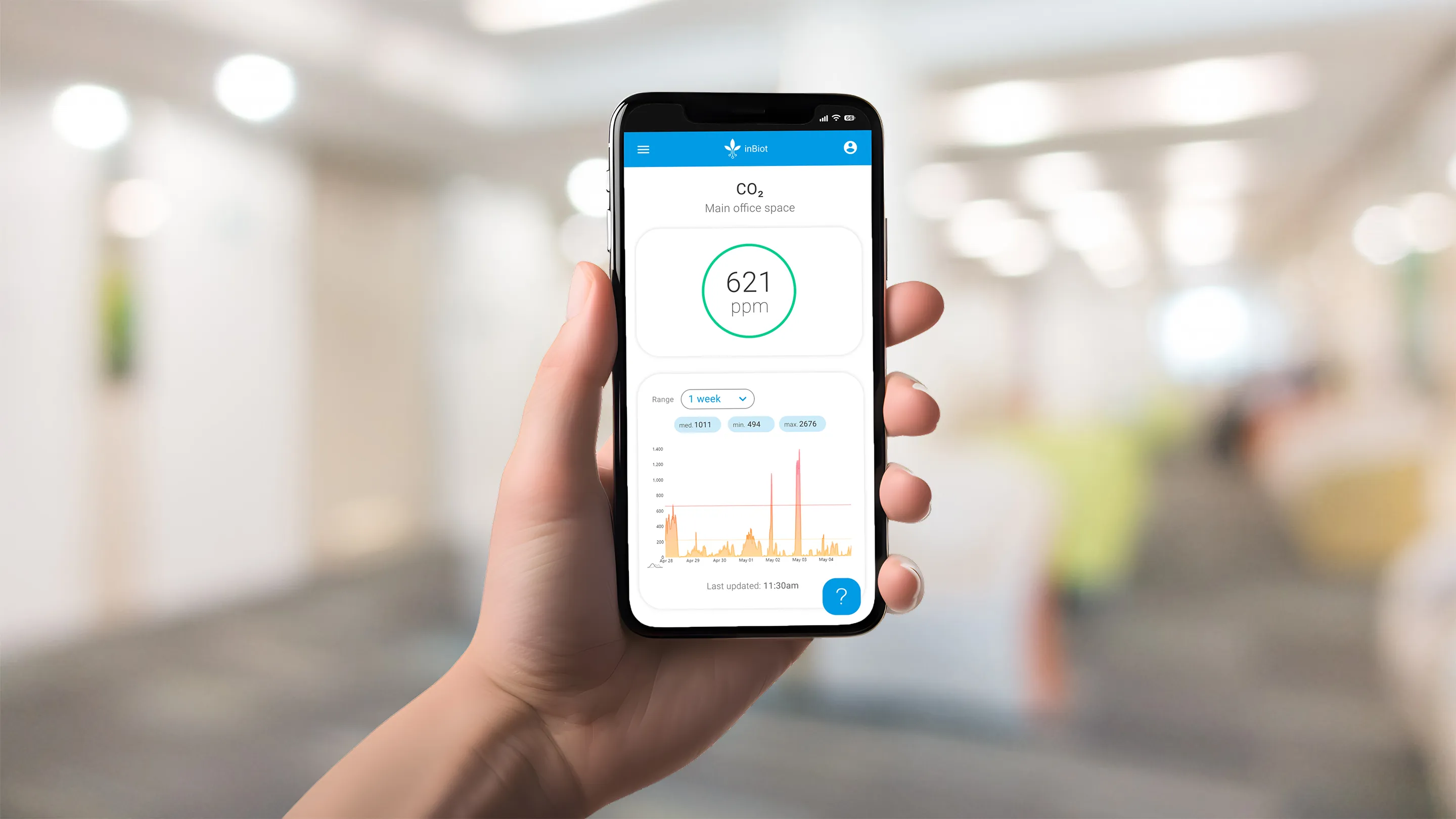
CO₂

Odorless, colorless, and tasteless gas that at high levels causes discomfort, drowsiness, and decreased productivity. Indicator of ventilation effectiveness.

View postAmpliar información